
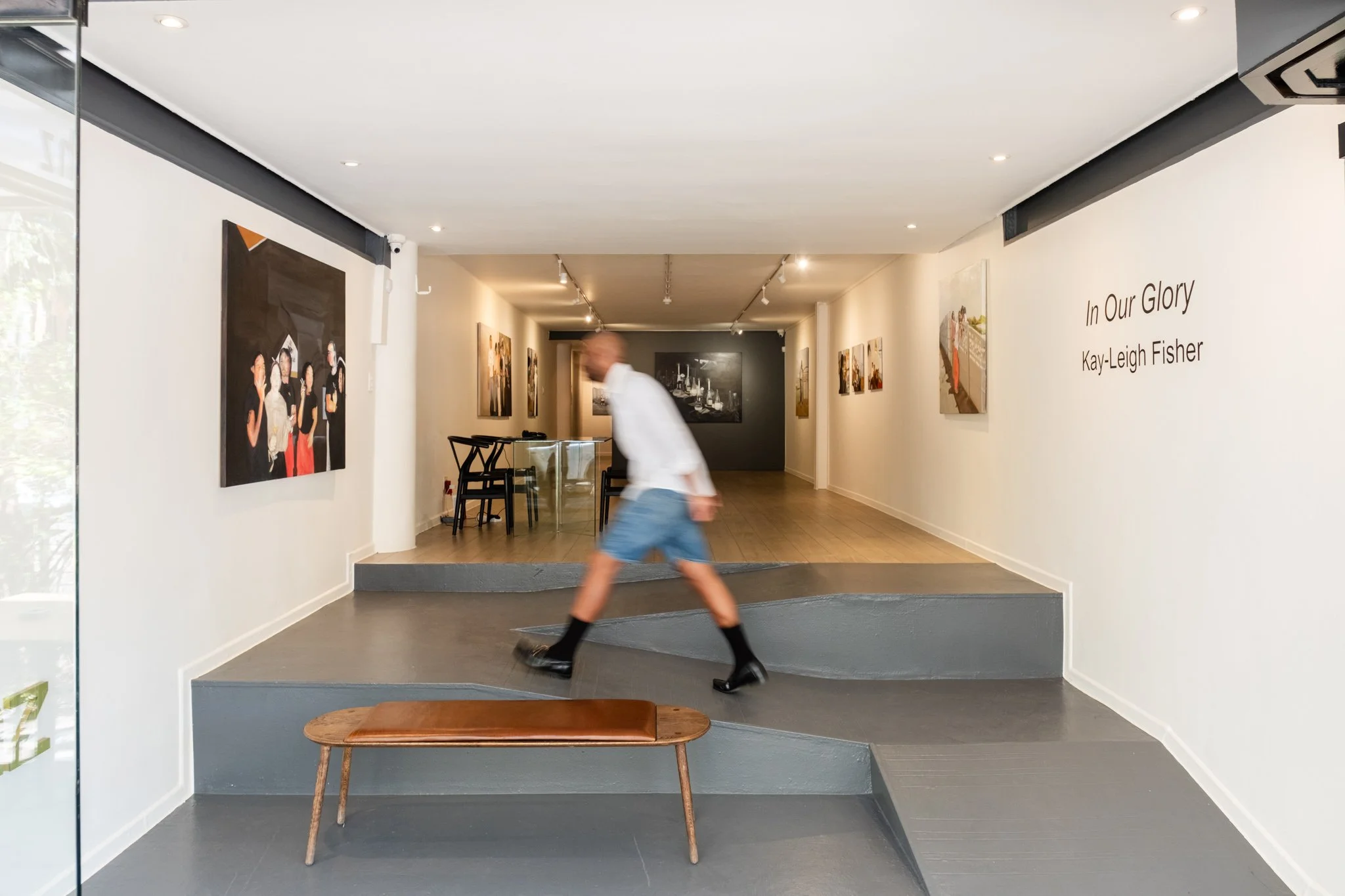
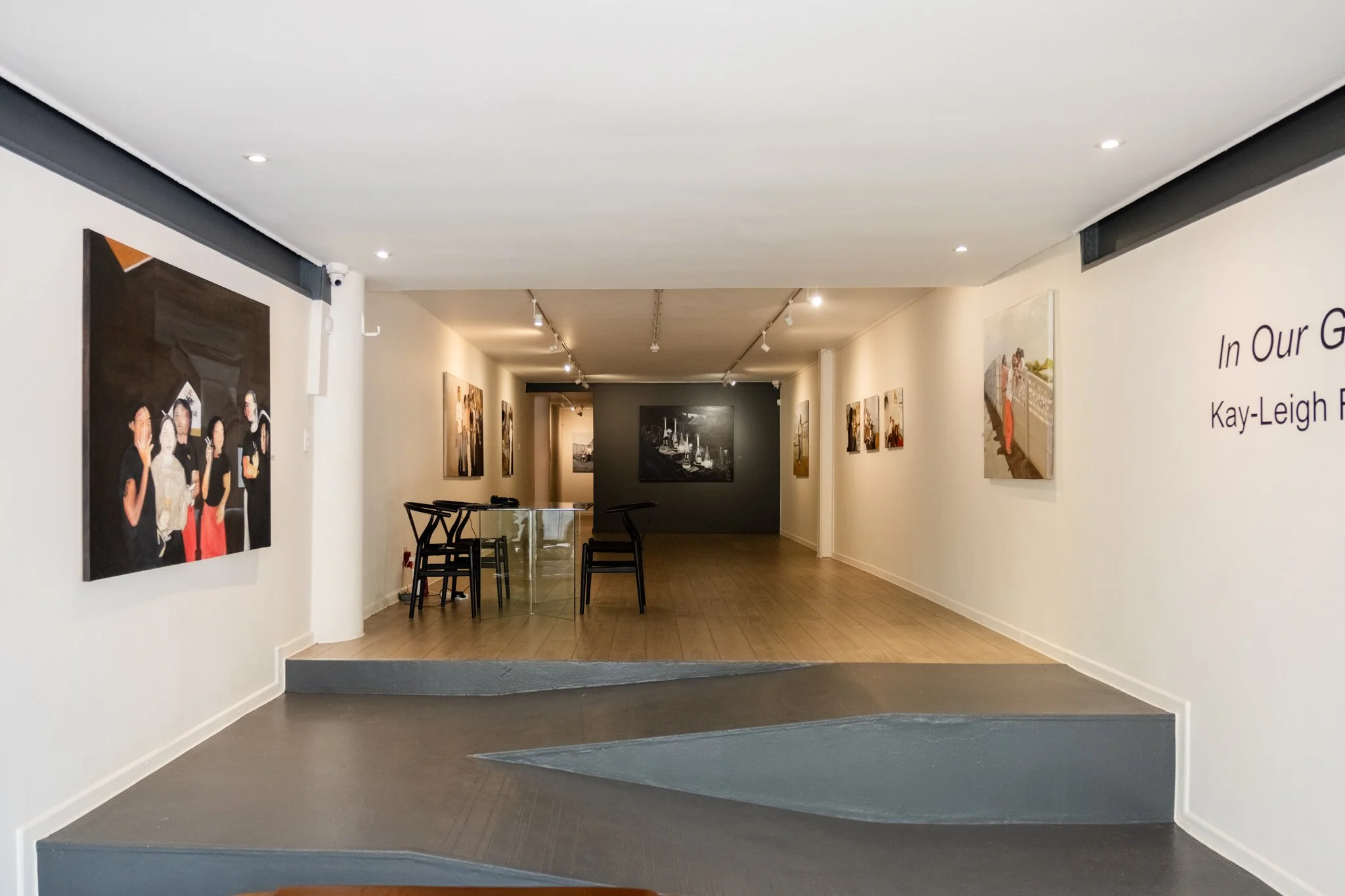
In Our Glory
Kay-Leigh Fisher
29.08.26 - 30.09.26
In the Blur
by Danielle Bowler
Kay-Leigh Fisher has long been suspicious of images. Or more particularly, of their ability to depict “truth”. Her work, while resting within portraiture betrays the impossibility of fully conveying the complex lives of those who people her paintings. Yet still, she searches; rooting this pursuit in an acute awareness of the power of images. With her debut solo exhibition at BKhZ, “In Our Glory”, she deftly makes visible an ongoing and open-ended unsettling of archives that are at once both personal and public.
As an artist, Fisher is a painter with a photographer’s sensibility and a researcher’s compulsion. Drawing a line across her practice is to observe an evolution of her arsenal of techniques – the methods and forms through which she stages questions of how space and socialisation shape who we are and can be, and how we understand our relation to ourselves and each other: what we have come to call identity.
In earlier work, dark-toned paintings and drawings depicted figures who feel perpetually in motion: heads double and features multiply as Fisher deliberately disorients, fantastically rendering questions of identity that simmer with familial ties. Across the “Speculations on Belonging” (2025) series, for instance, she uses a palette of mostly black, brown and grey oil to turn the exposure down. The effect is an existential sense of the unresolved, and perhaps even melancholic – that is always, however, countered with the refuge of touch and intimacy; a sense of finding shelter in another.
Over the past few years, there has been a subtle shift in her approach – as the blur that characterises her work has softened into sepia-tinged explorations that hew more closely to film photographs. The effect is like opening the brown leather suitcases that hold albums, loose photographs and documents, to find a rippling ricochet of questions and answers – like a cacophony of echoes.
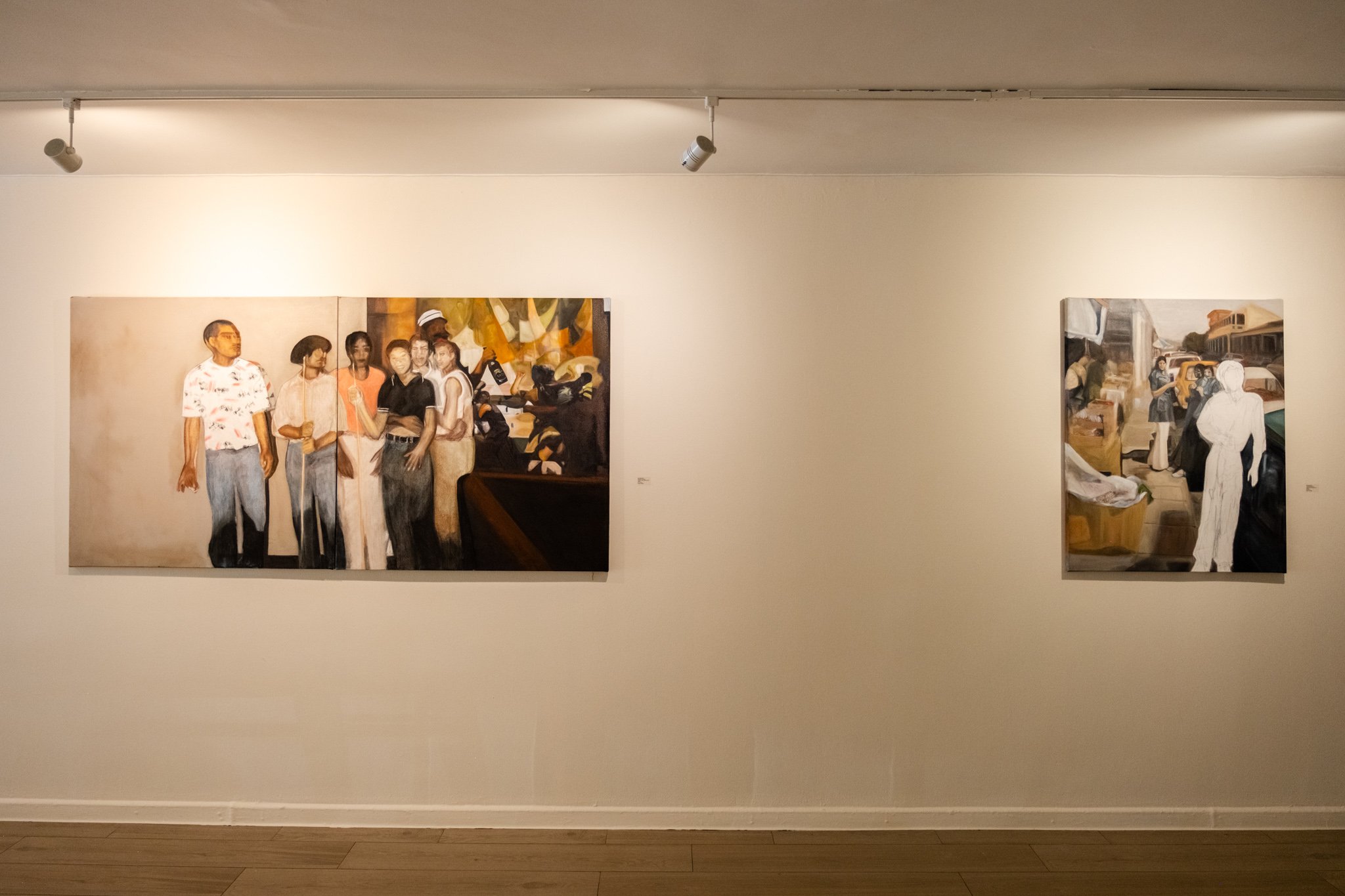
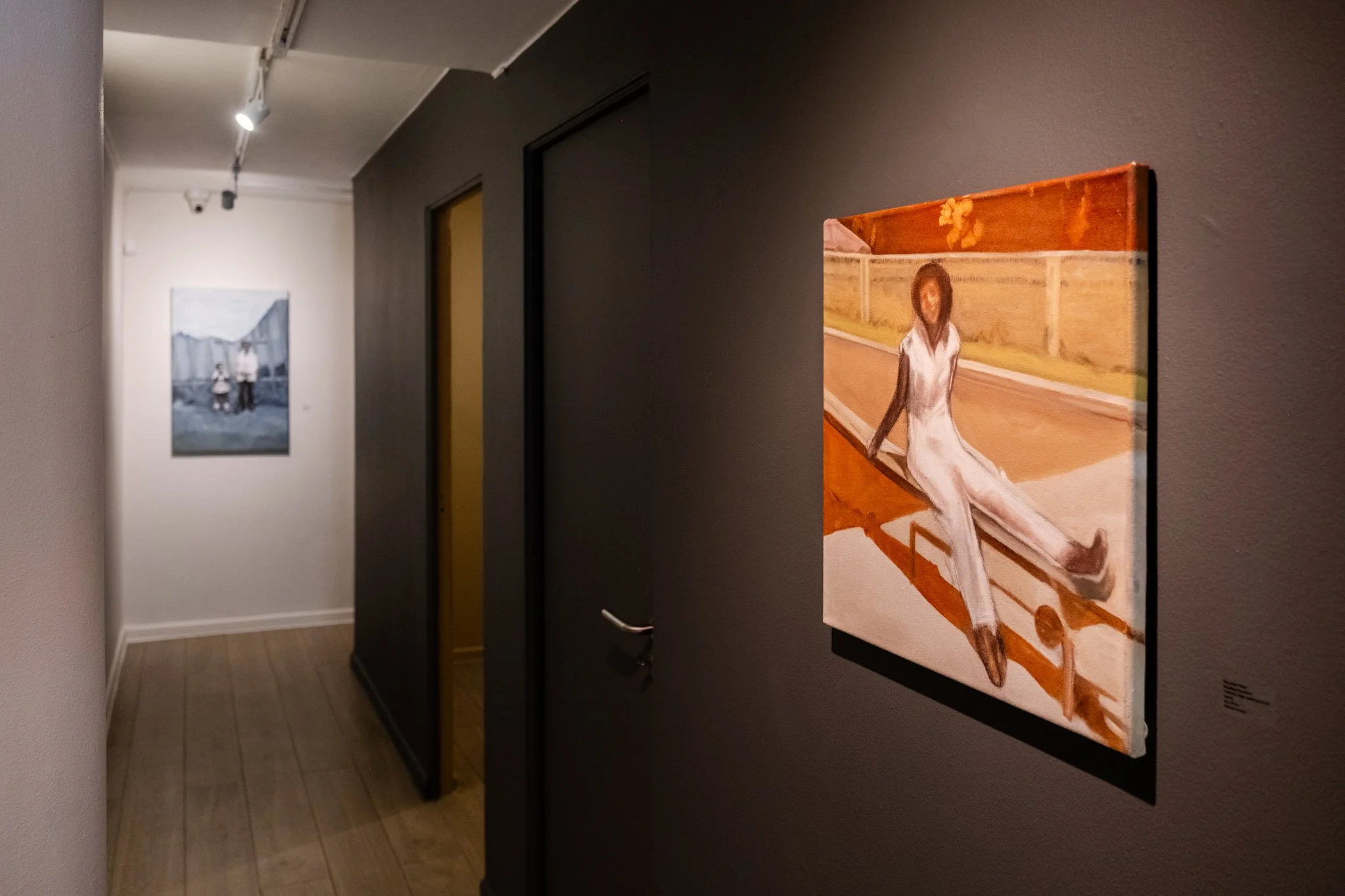
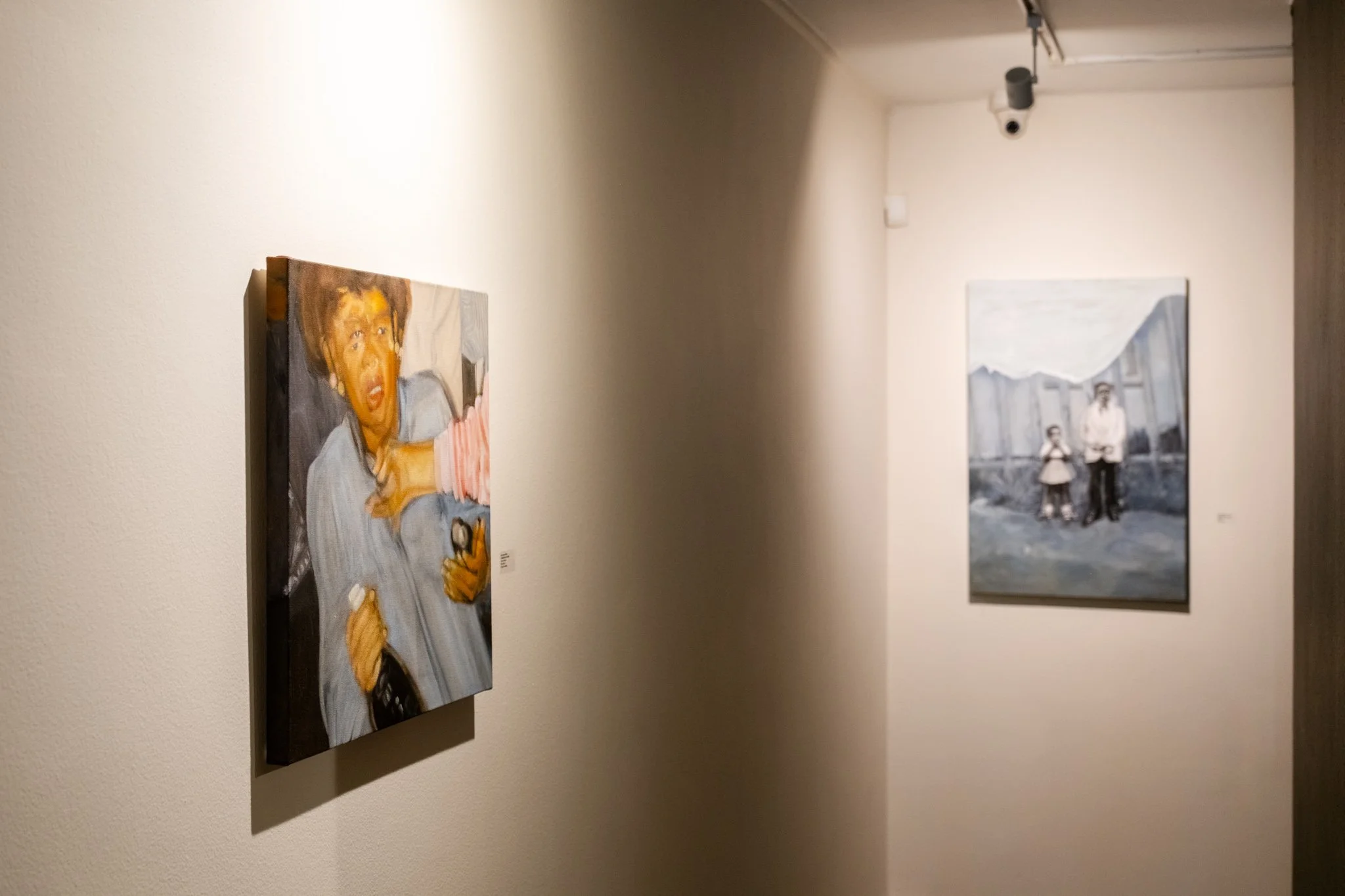
In small acts, the multigenerational personal photographs of Fisher’s family and friends answer the call of political memory and the public archive. The 13 works that form this exhibition are not interested in uncomplicated representation and comforting nostalgia. Instead, she looks askance at her own memories and those of others, considering what’s in focus through throwing it entirely out thereof.
These are paintings set to a slow shutter speed. They ask us, as audience, to consider what we see – and how we remember. ….. Continued below
Kay-Leigh Fisher
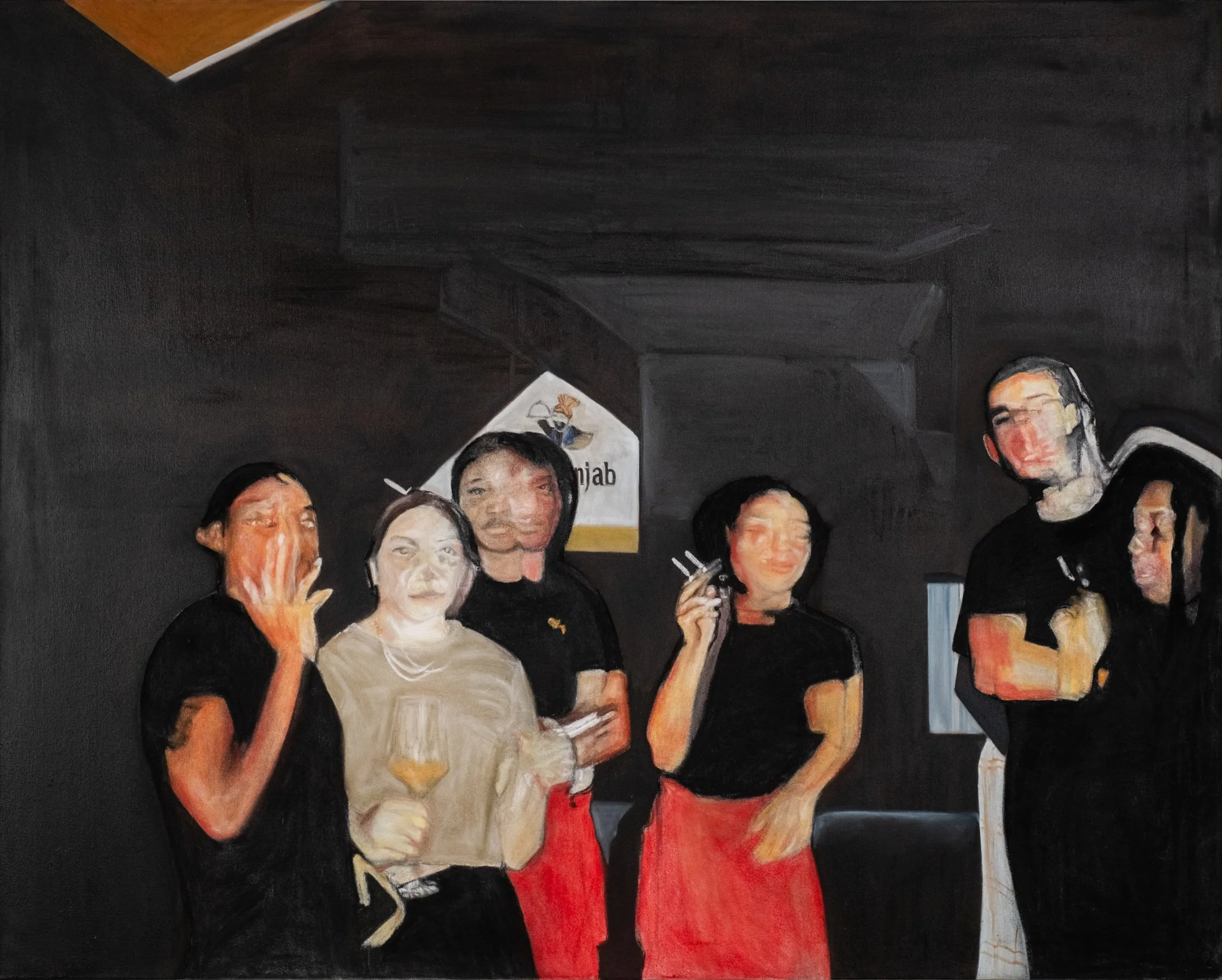
Smoke breaks in backrooms
Charcoal, chalk, pastel and oil on canvas
120 x 100 cm
ZAR 35 000 Excl. VAT
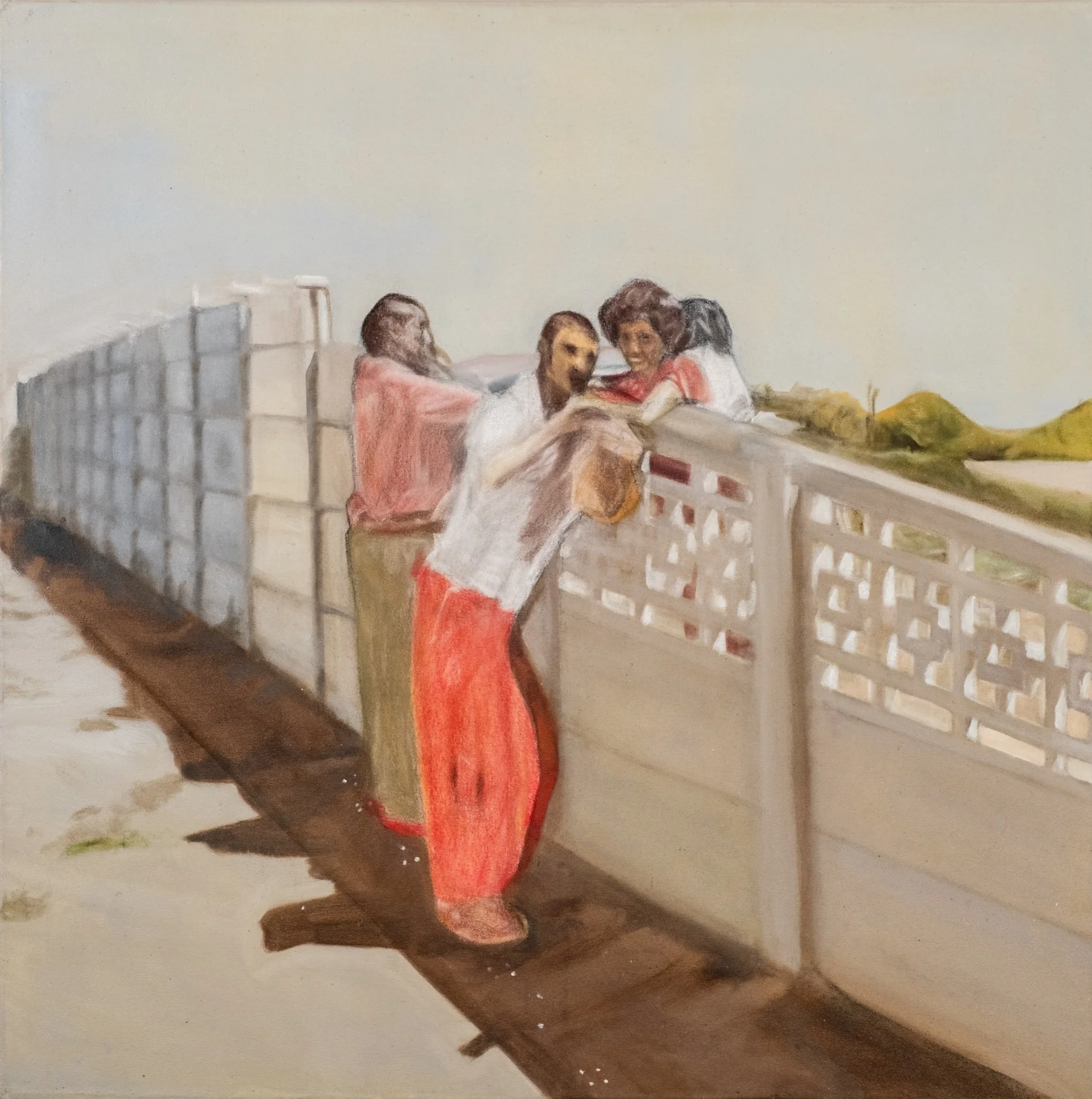
Kay-Leigh Fisher
Memories of Blackberry Street II
Charcoal, chalk,
pastel and oil on
canvas
100 x 100 cm
ZAR 30 000 Excl. VAT
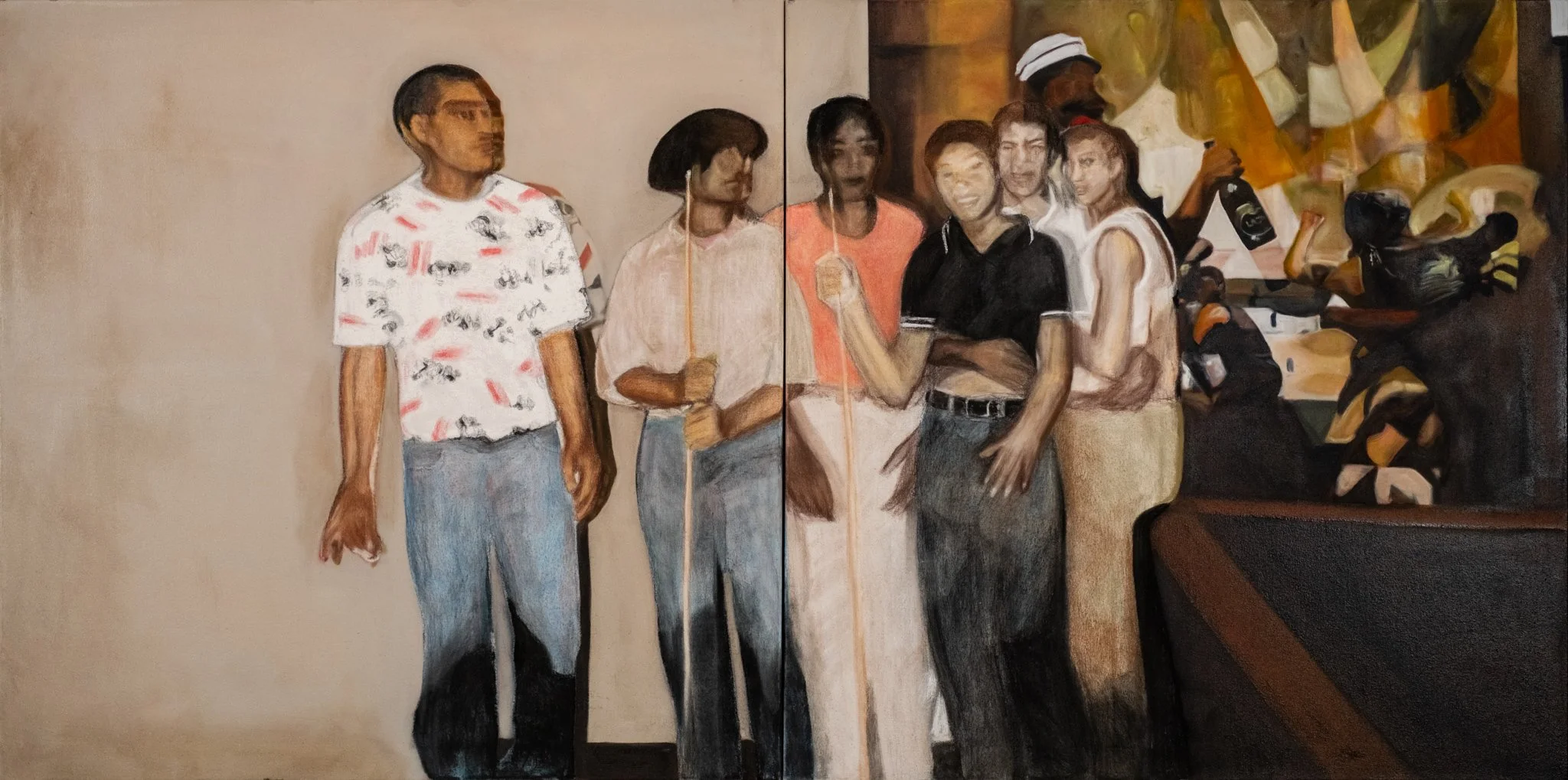
Kay-Leigh Fisher
The Age of Innocence
Charcoal, chalk, pastel and oil on canvas
100 x 200 cm
ZAR 45 000 excl. VAT (Reserved)
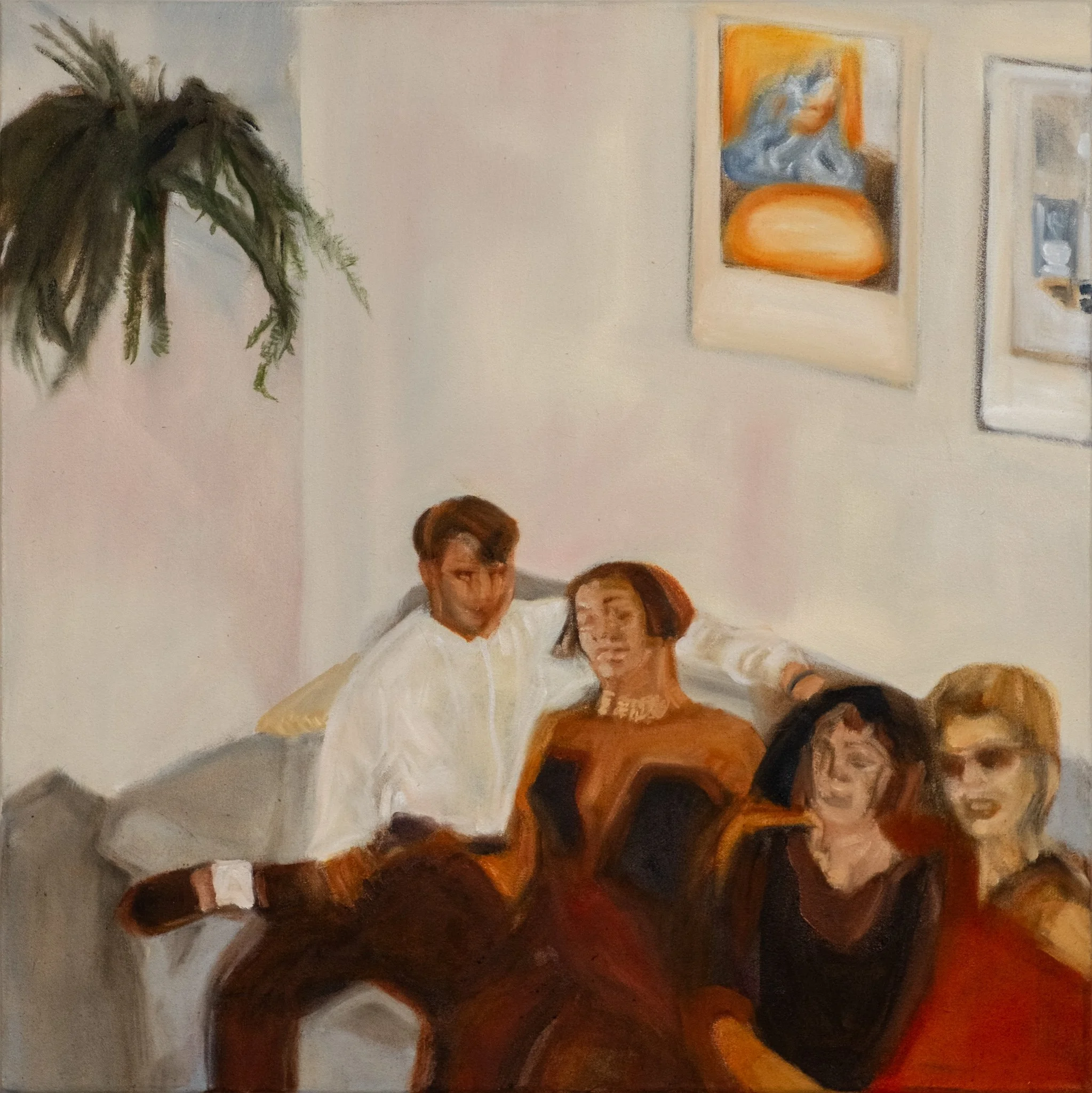
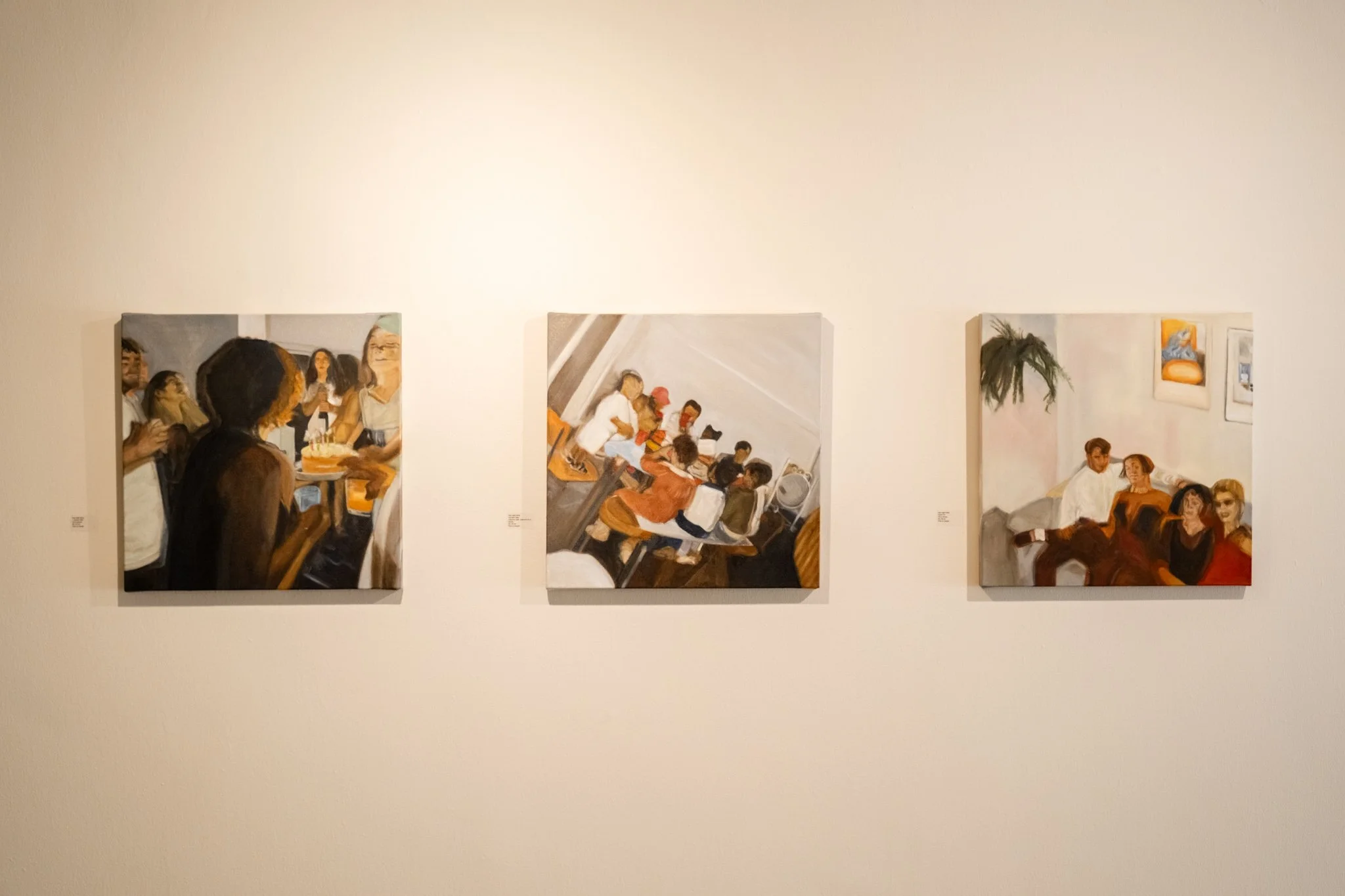
Kay-Leigh Fisher
Queer Era
Oil on canvas
50 x 50 cm
ZAR 14 500 Excl.VAT
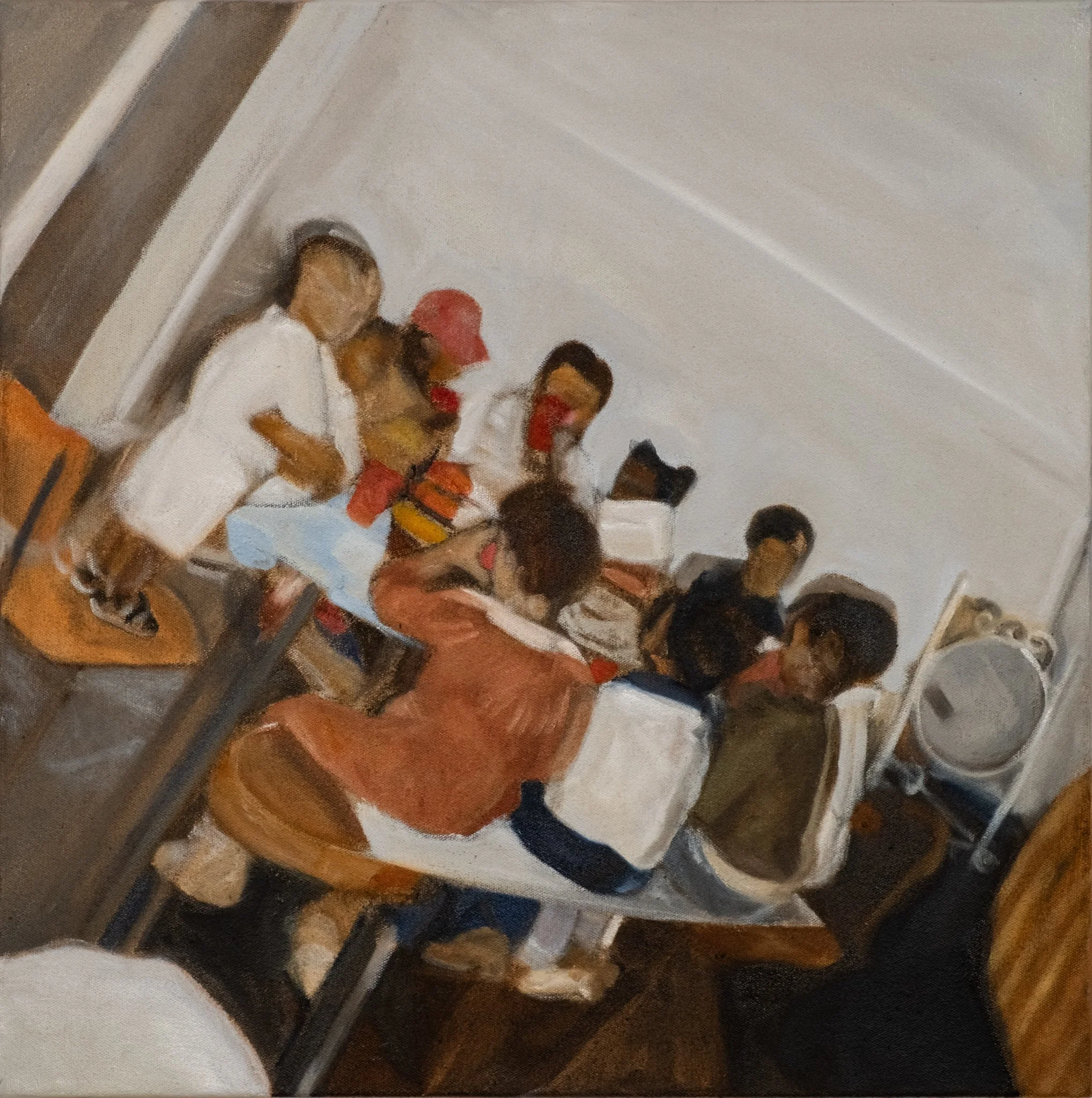
Kay-Leigh Fisher
The Kids’ Table
Charcoal, chalk,
pastel and oil on
canvas
50 x 50 cm
ZAR 14 500 Excl. VAT
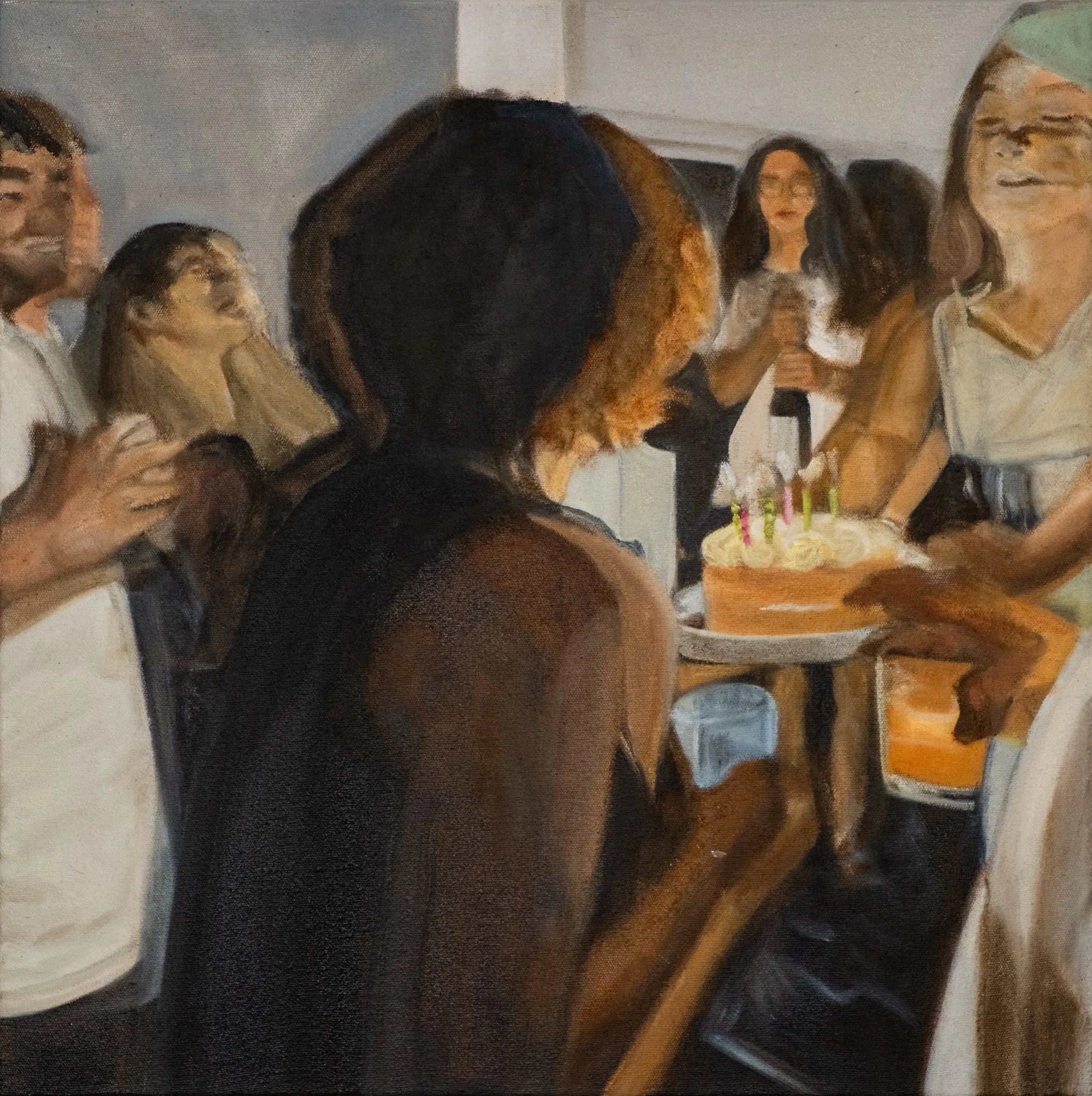
Kay-Leigh Fisher
1 January 2026
Oil on canvas
50 x 50 cm
ZAR 14 500 Excl. VAT
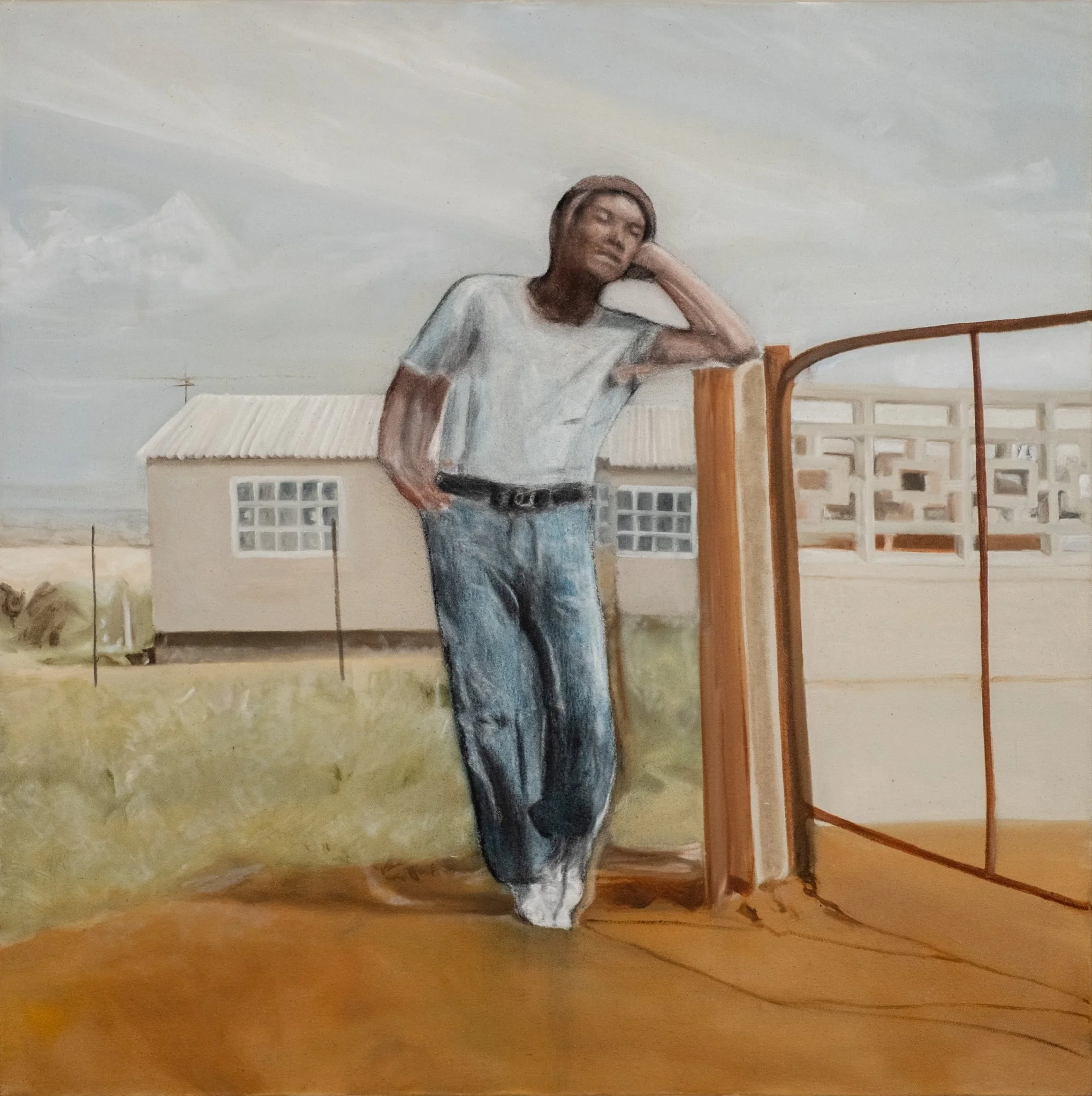
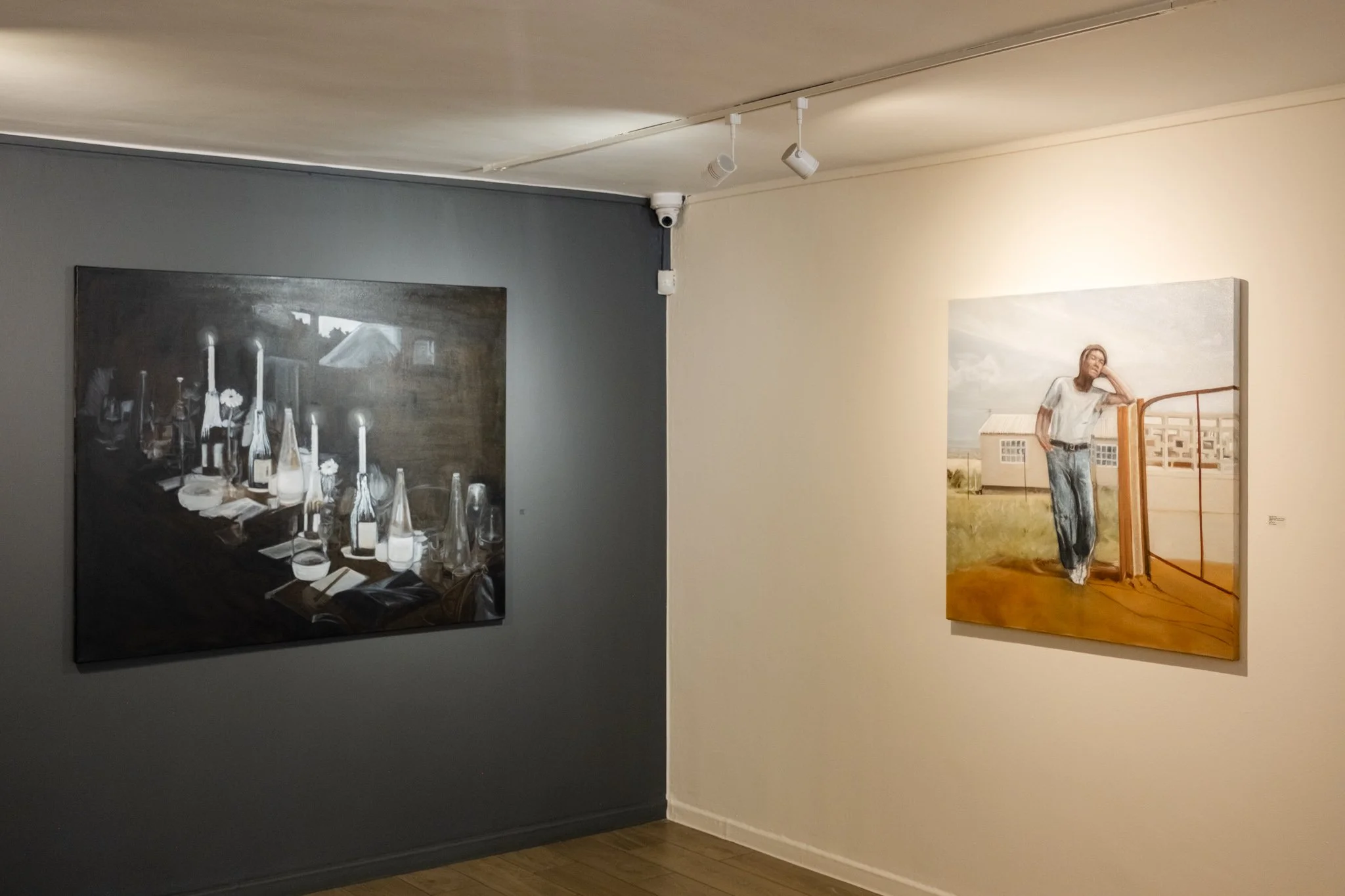
Kay-Leigh Fisher
Toekomsrus (Future Place of Rest)
Charcoal, chalk, pastel and oil on canvas
100 x 100 cm
ZAR 30 000 Excl. VAT
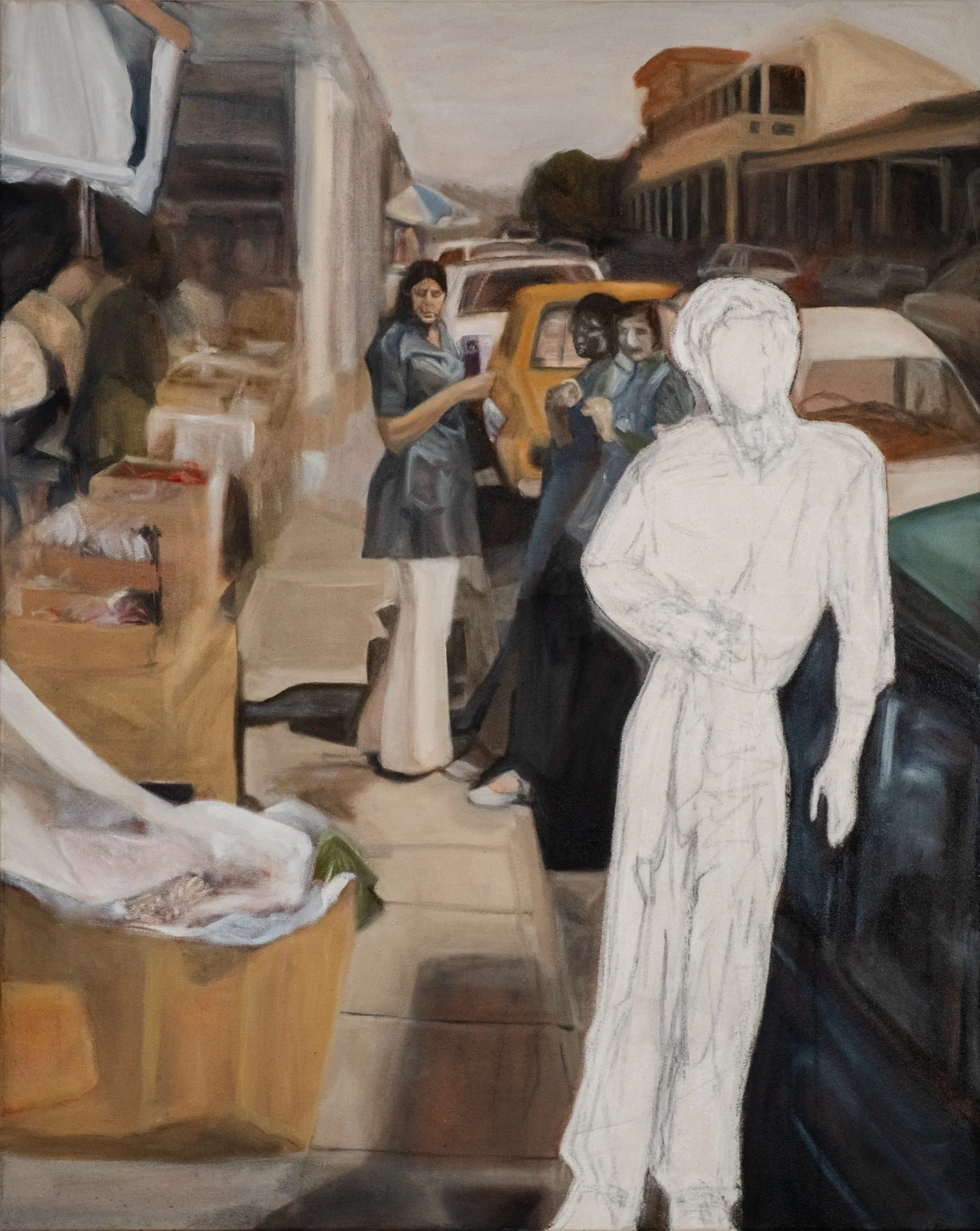
Kay-Leigh Fisher
You Should Be Here II
Charcoal, chalk, pastel and oil on canvas
90 x 60 cm
ZAR 23 000 Excl. VAT
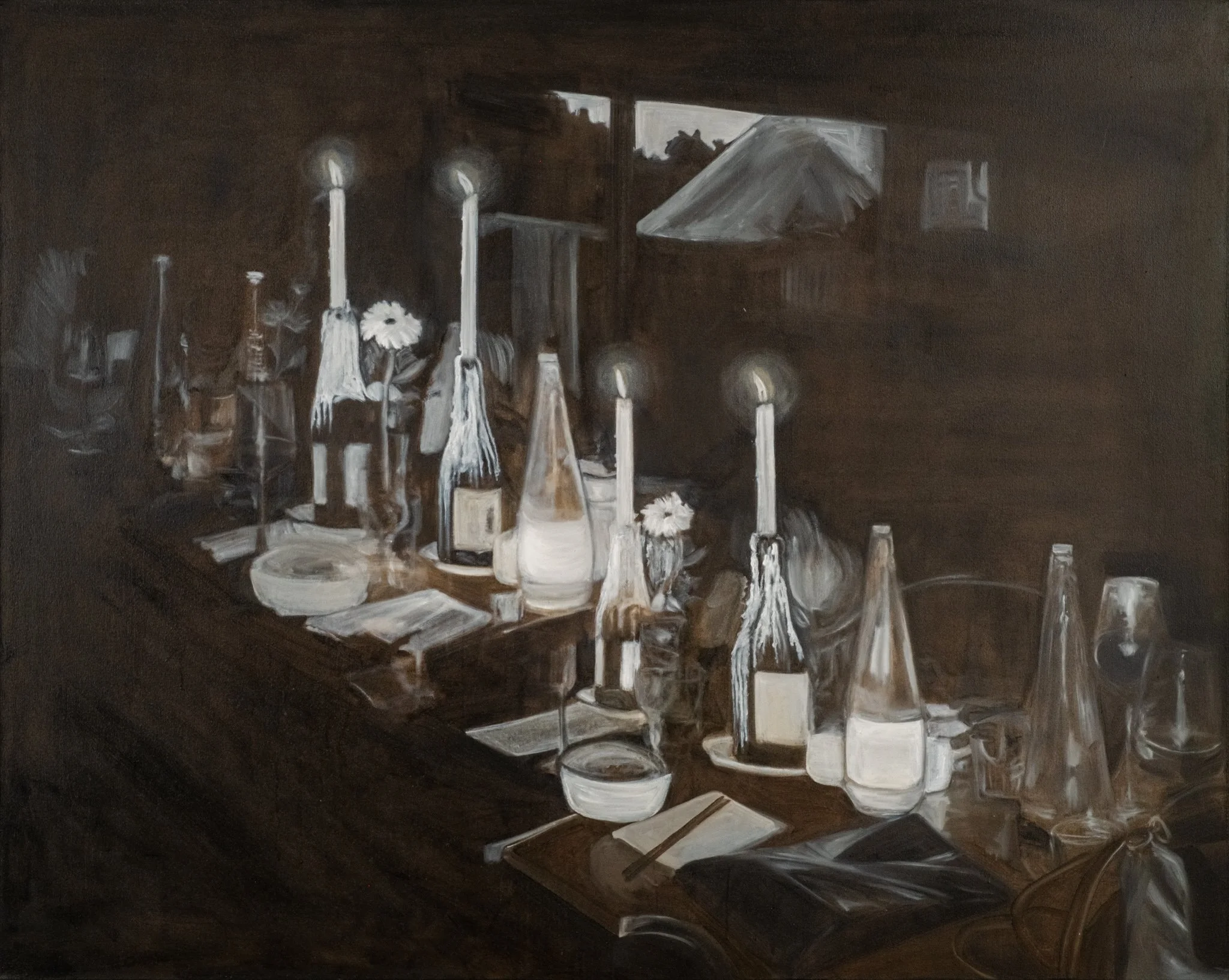
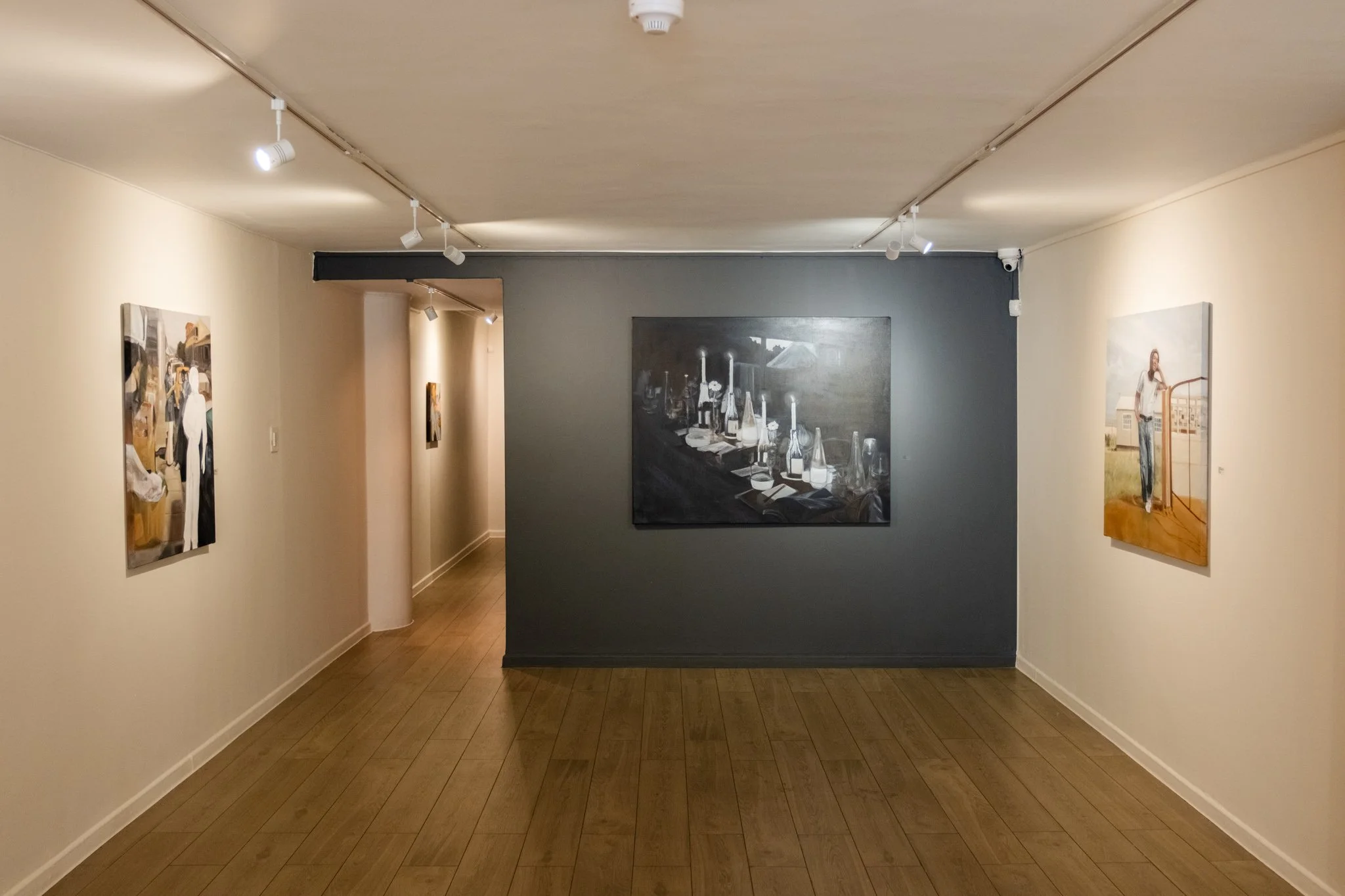
Kay-Leigh Fisher
Acid, The Bar
Oil on canvas
100 x 120 cm
ZAR 40 000 Excl. VAT
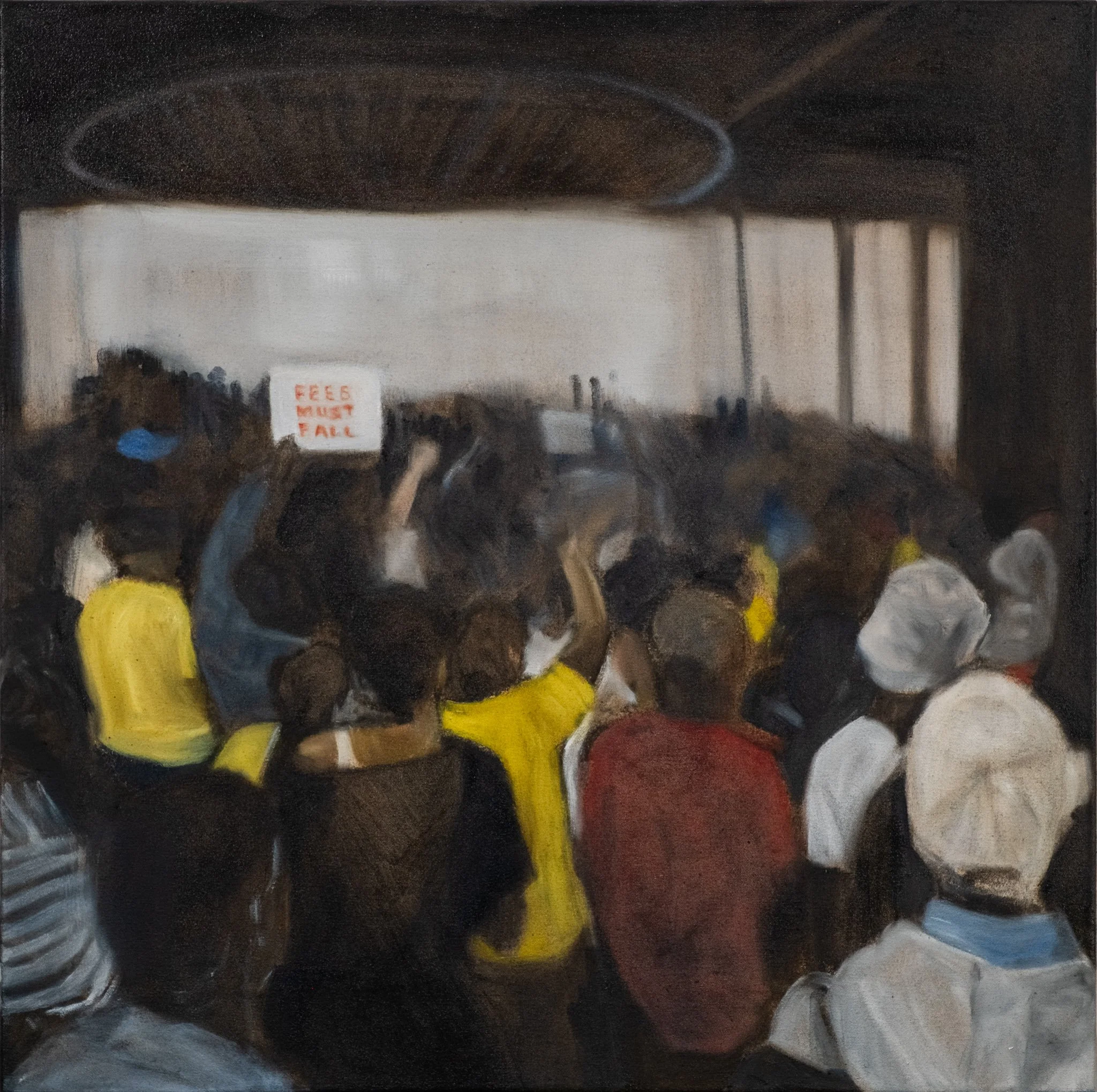
Kay-Leigh Fisher
Fees must fall
Oil on canvas
50 x 50 cm
ZAR 14 500 Excl. VAT
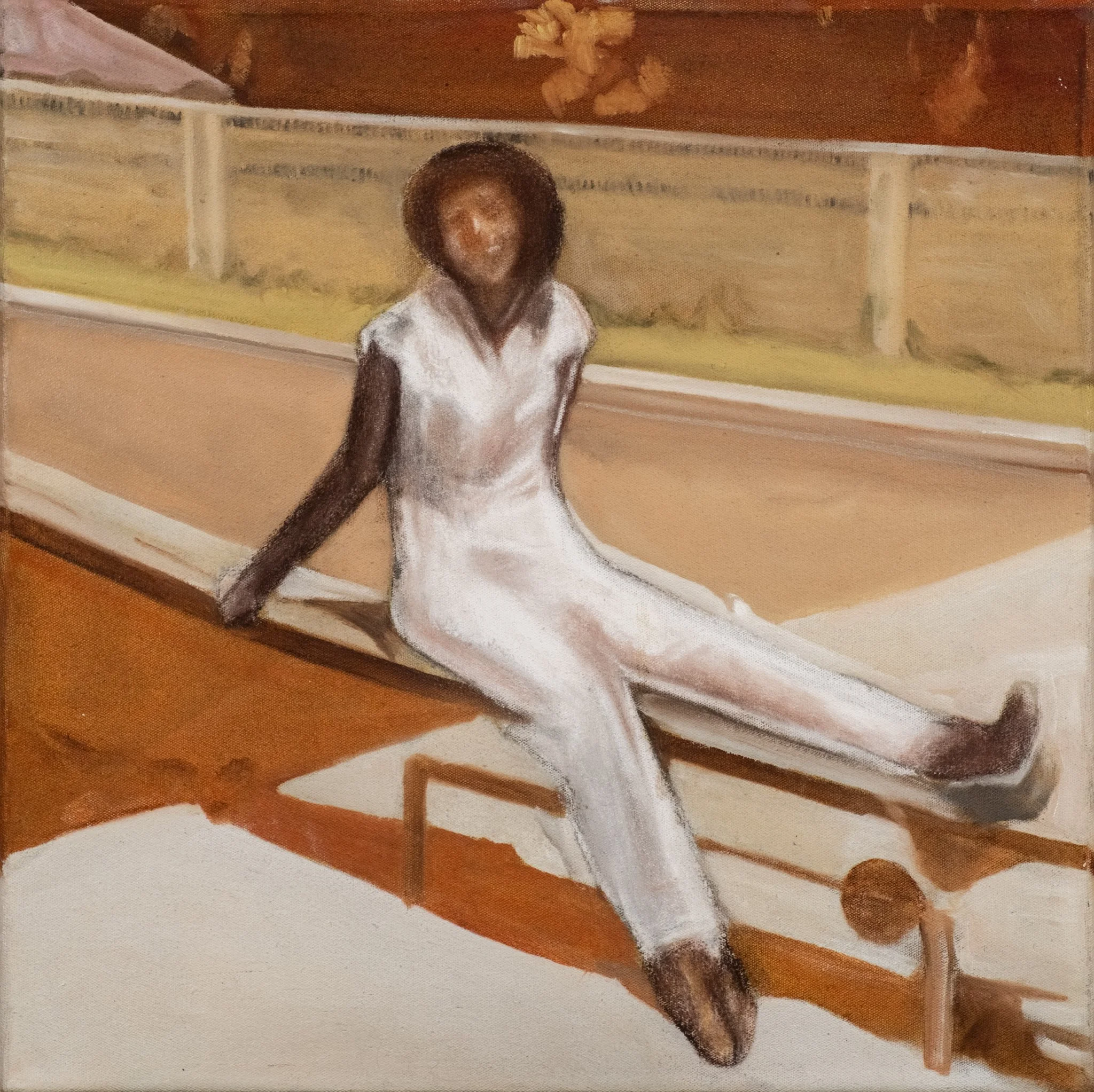
Kay-Leigh Fisher
Recalling Ramolda II
Charcoal, chalk,
pastel and oil on
canvas
50 x 50 cm
ZAR 14 500 Excl. VAT
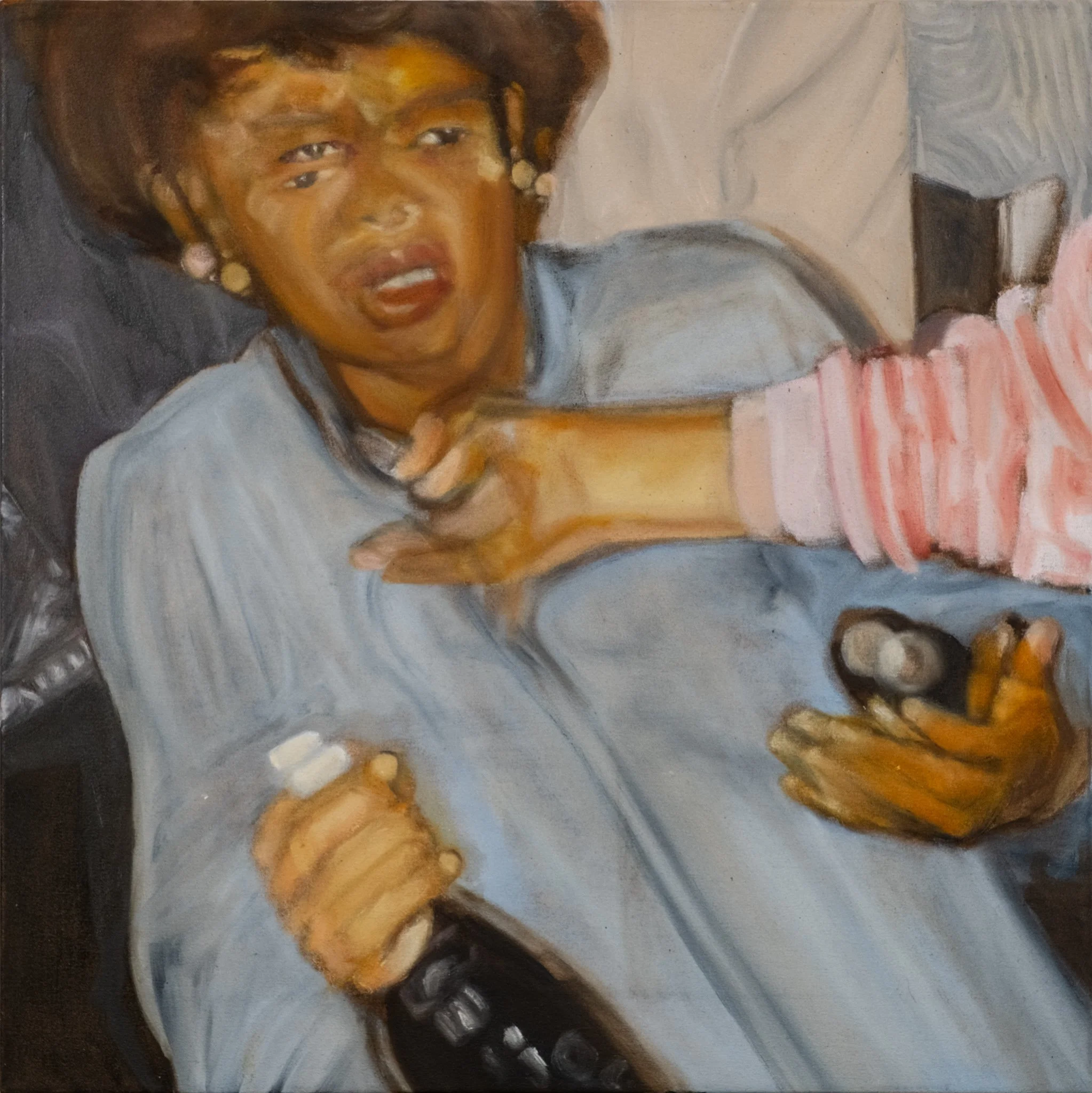
Kay-Leigh Fisher
Untitled (Brown Bottle)
Oil on canvas
50 x 50 cm
ZAR 14 500 excl. VAT
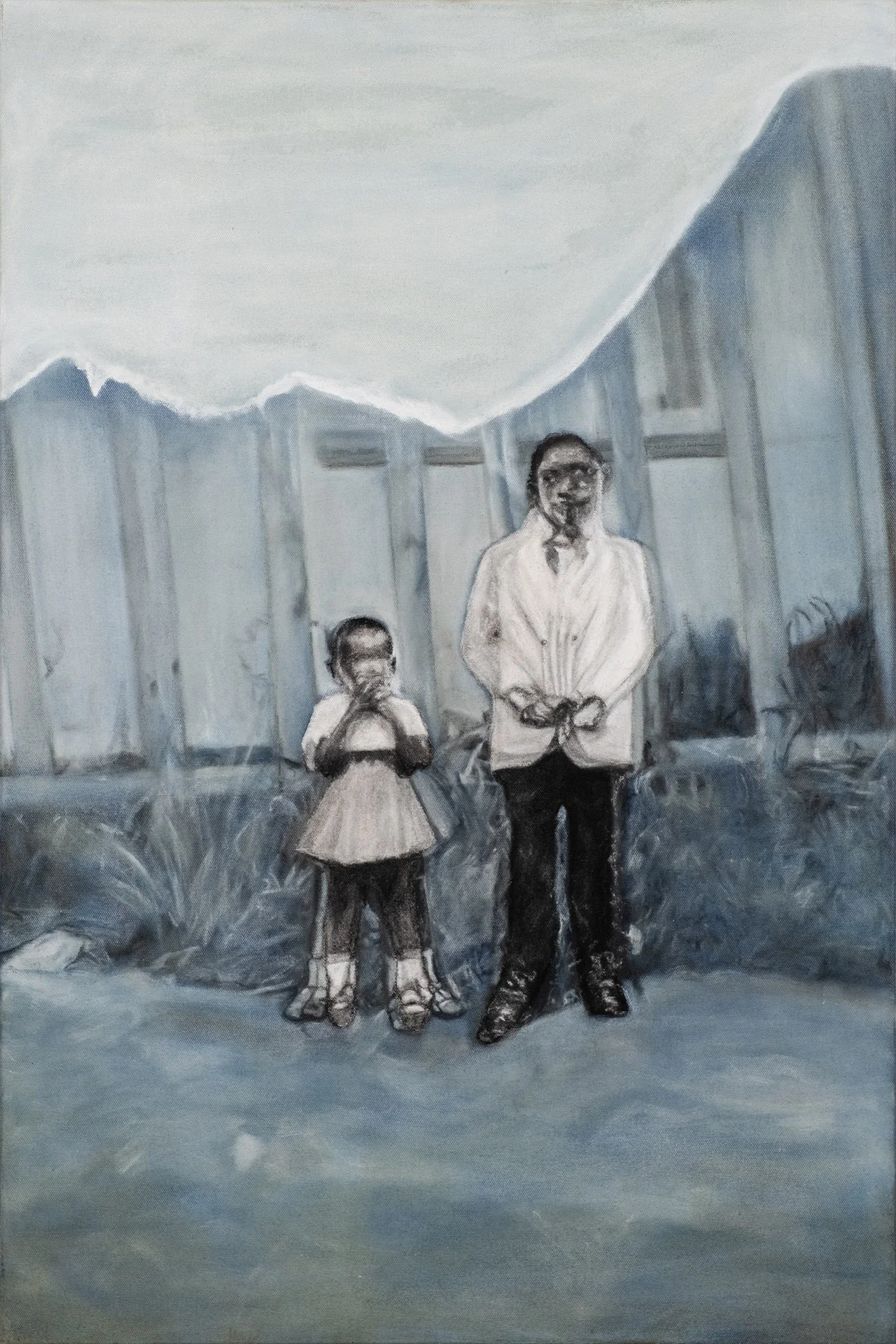
Kay-Leigh Fisher
Memories of Blackberry Street
Charcoal chalk and
pastel on canvas
90 x 60 cm
ZAR 23 000 Excl. VAT
For all inquiries contact info@bkhz.co.za
*Continued
“In Our Glory” takes its title from a chapter in bell hooks’ Art on My Mind: Visual Politics (1995), titled “In Our Glory: Photography and Black Life”, which inspired most of the works on show. “[hooks is] thinking about the black subject and photography and what we choose to archive, what we put choose to put up in our homes, the images that are passed down from generation to generation, and how the story of the people in them is dictated by the relationship that you had with that person”, Fisher explains in a studio visit. “So, you can tell a very beautiful story, or you can tell the truth about all the negativity that might exist”.
Fisher is a truth teller who operates with a keen awareness that hers is but one version of a story. This work aims to taps “into a more authentic archive” than previous Pinterest inspiration images, as she is trying to “think about the archive differently”, she explains. For Fisher, this means “thinking about the archive that you're making in comparison to the archive that exists that tells a story of where you came from. It's thinking about that generational identity that is being passed along, that is being kept safe, that is being narrated”.
Within an awareness of the subjective act of narration, she makes the unreliable tactile. Her paintings are “haptic” in the way that weighted histories are felt through her blur. Through the filmic blur, figures constantly escape the narrative frame, resisting its edges, and occupying a space between dream and reality. This is the work of memory in motion.
*
“I felt that with the current turn to everything digital, I could also archive the images that exist that [friends and family are] willing to share with me”, Fisher explains. The exhibition is her way of building a shared story of the lives they have collectively built in Johannesburg. Many of the works in “In Our Glory” are located in Toekomsrus, the West Rand township where coloured people were relocated to during the forced removals of the 1950s. In the painting that bears its name, a man momentarily leans against a gate’s pole, his white-sneakered feet meeting ruddy earth and chin turned towards the sky. Translating as “future place of rest”, the cruelty of apartheid is embedded in Toekomsrus’ name; and it quietly speaks through his brief reprieve. What does it mean for displaced people to create home in a place where rest is forever deferred?
Fisher asks this question of Johannesburg and South Africa, at large, collapsing time through the way she contrasts the motility of her youth with the limitations placed on family members like her mother, grand-aunt and uncle. The images of the city spaces she wants to remember like the now-closed “ACID Bar”, and defining moments like the Fees Must Fall protests, sit against one of the first times her mother would have been allowed to go out in “The Age of Innocence” and her aunt reclining against a park slide. Similarly, her birthday party on “1 January 2026” is juxtaposed by an image of her uncle at “The Kids Table”. In each work, she asks what is in view – questioning the context that both frames and makes the image, and experience, possible. This is felt, most deeply, in the mixed media approach that suspends the chalk outline of her uncle on a street in Fordsburg. “You Should Be Here II” is not a postcard declaration – ambiguously becoming an enquiry, investigation and statement of loss through her framing – as he is highlighted occupying an area where he would not have been permitted to be, as 1950s race laws demarcated space.
Still, these images do not rest in a mournfully nostalgic register. The feelings they conjure are complex and multiple, left unresolved for us as audience – perhaps even for Fisher herself. hooks’ text opens with her being transfixed by an image of her father as a young man. The photograph allows her to see him differently. “Although my sisters and I look at this snapshot and see the same man, we do not see him in the same way”, she writes. “Our "reading" and experience of this image is shaped by our relationship to him, to the world of childhood and the images that make our life what it is now. I want to rescue and preserve this image of our father, not let it be forgotten. It allows me to understand him, provides away for me to know him that makes it possible to love him again and against past all the other images, the ones that stand in the way of love. Such is the power of the photograph, of the image, that it can give back and take away, that it can bind.”This sense of the power and preservation of the photograph pervades “In Our Glory” – as Fisher’s insistent gaze relentless question both who she is looking at and how she looks.
Her titles reveal this. Fisher often works in series, interested in looking again and from different angles. “Recalling Ramolda II” and “Memories of Blackberry Street I & II” and “You Should Be Here II” indicate this studious inclination.
“Memories of Blackberry Street I & II” form a diptych-like study in contrast. While being located in the same place, distinct experiences are explored through colour, form and material. The first work in the series sets a “Sunday Best” scene between siblings in monotone, suffusing it with a foreboding tension. “I wanted to capture the tension between youth and especially colored youth. This little boy already looks tense and worried and like he's uncertain, and she just is just innocent and going about her life”. For Fisher, the work expresses “the tension of growing up in certain spaces as well that weigh on us even when we don't know it yet”. In contrast, “Memories of Blackberry Street II” uses vibrant reds to stage a convivial conversation, held over low walls between neighbours. It is stunning way to convey the intimacy and community that is characteristic of small towns – and the everyday joy that can be found in small moments of connection.
In her works, the experiences that connect and separate us are always in sticky relation – a dislocation that is never avoided. Fisher paints with a tender awareness of what is concealed and revealed through her treatment. Facial expressions are often out of our reach, withheld in striking opacity as we are permitted partial entry into these worlds. Asked about this, she shares that “there's less focus on the individual, but more [on] the collective experience”.
*
Space, connection and relation define Kay-Leigh Fisher’s work. In her hands, archival urgency is not a reconstruction of the photograph but a sight of investigation and preservation.Gathering these images, she forms a self-reflexive photo album – letting go of linearity and remaining open to memory’s multiplicity, fragmented nature and instability.
These works hold a sense of the snapshot: deliberately made, momentary and resisting a straight-lined narrative. In the chapter that inspired the exhibition, hooks writes: “I gather snapshots and lay them out, to see what narratives the images tell, what they say without words. I search these images to see if there are imprints waiting to be seen, recognised, and read”. This is the thesis statement of “In Our Glory” – as Fisher holds the people in these paintings and her “living archive”, up to the light – allowing them to be seen in sensitive splendor. As she does so, her searching is always on the surface, as she asks what the original photographs hum with, both attentively listening and aware of the sound of her own voice.